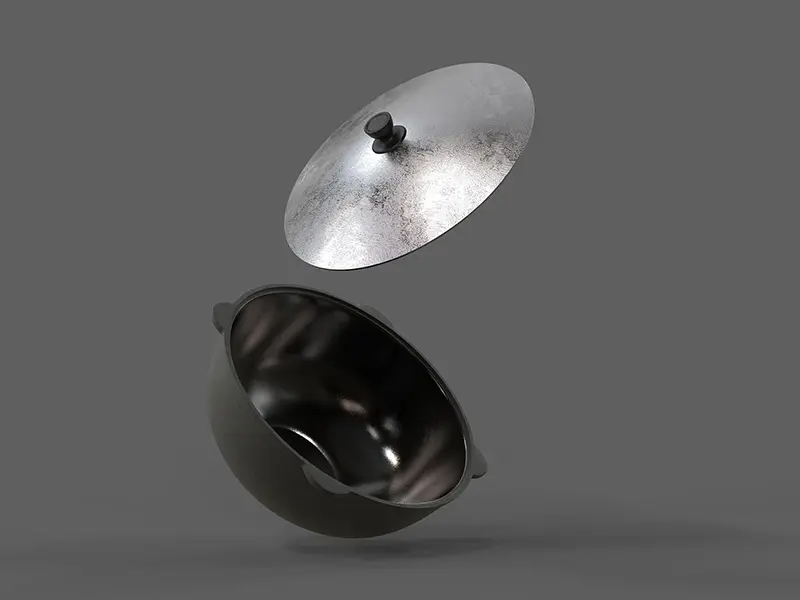
After casting, the cauldrons are coated with cotton oil and do not require any complicated preparation (scrubbing with a wire brush or angle grinder, burning with salt or a lot of oil).
First preparation before use:
- We wash with soapy water. We rinse it clean. We dry it.
- Heat as for everyday use, apply a thin layer of oil with a dry cloth or paper towel. When the oil “runs off”, you can apply it a few more times. If the bottom turns “white” when heated, it means it is being heated too much.
Daily preparation:
- We heat the cauldron, when the old oil has evaporated, we clean the ash or burnt residue with a dry paper towel.
- We grease it with a thin layer of oil.
- We always start cooking in a hot cauldron, unless the recipe emphasizes adding ingredients to a cold cauldron.
Cleaning up after cooking:
- If it was a greasy dish (fish, steak, etc.) – we simply wipe it dry with a paper towel.
- If there are any lumps or burns, scrape them off with a hard wooden spatula.
- If it was a thick stew or mashed/floury soup – you need to wash it with warm water.
- Grease with a thin layer of oil. the sides of the handles too, if they are still new and rust appears.
Cast iron is a chemically active and porous metal alloy, so it takes quite a while to blacken the paper towel initially. The blackening will decrease with each baking.
Food should not be left in cauldrons overnight, as various reactions occur when in contact with the salts and acids in the food and the subsequent cooking will have a “metallic taste”.